
Avoiding a Roy Family Reunion: Why Nonprofits Need Succession Plans

Updated: Jun 24
This weekend, my husband and I hosted "Camp Gramsy and Pops" for our three-year-old and five-month-old grandchildren. Actually, it was mostly for us (and for our daughter and son-in-law, who were able to enjoy some child-free time together). Luckily for everyone involved, both children sleep through the night.
As I watched our grandchildren explore the world around them, I found myself reflecting on how our roles change over time. This weekend, I saw clearly how my role at home was evolving from mother to grandmother. At work, our roles change too. We move from supporter to volunteer, from volunteer to Board member, from development officer to Executive Director, and sometimes from staff member back to volunteer. Each transition brings new opportunities, new responsibilities, and new perspectives.
The question is: how should we prepare for those changes?
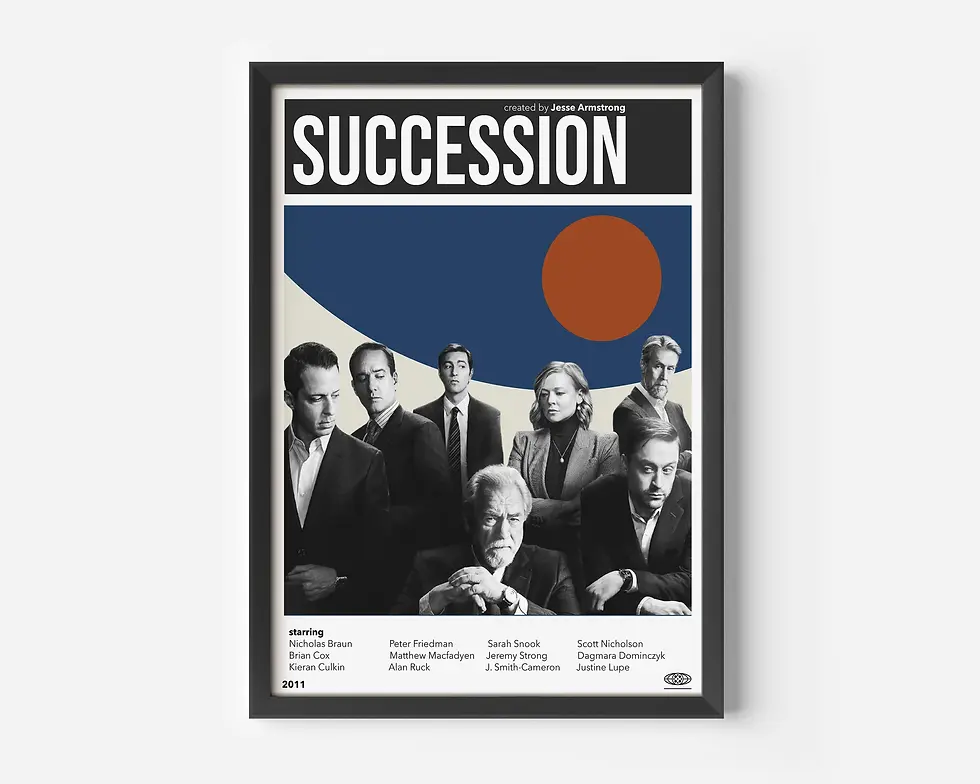
The HBO series Succession explores the transition of leadership and all the complications that arise when family loyalty, power, and money are involved. While most nonprofit organizations don't face billion-dollar corporate battles, they do face their own succession challenges. Leadership transitions can be emotional, complicated, and consequential—particularly when an organization's mission, culture, and sustainability are at stake.
In the nonprofit sector, succession planning is often viewed as something to address when an Executive Director announces a retirement or when a beloved founder begins discussing "what's next." But effective succession planning is much broader than replacing a chief executive. It is about ensuring continuity, preserving institutional knowledge, and preparing the organization for inevitable change at every level.
In our nonprofit work, succession often involves Boards. How do they see the organization's next chapter? Where does their loyalty lie—to a founder, a long-serving Executive Director, a particular program, or to the mission itself? One of the central themes of Succession is the tension between loyalty to an individual and loyalty to an institution. Nonprofit Boards face a version of that same question. The healthiest organizations ensure that commitment to the mission remains stronger than attachment to any one leader.
And we can't forget our volunteer leadership. Many organizations have a process for recruiting new Board members, but do they have a plan for identifying the next volunteer who will chair the annual gala, lead advocacy efforts, organize the golf tournament, or coordinate a major fundraising campaign? When key volunteers step away, years of relationships, expertise, and organizational memory can leave with them.
The same is true for staff. What will happen when your development director accepts another position? If your finance manager retired unexpectedly? If your Executive Director needed to step away for an extended period? Organizations that rely heavily on one or two key individuals often discover too late that important knowledge, donor relationships, and operational processes exist only in someone's head.
A thoughtful succession plan helps reduce that risk. It identifies critical roles throughout the organization, documents essential responsibilities, creates opportunities for leadership development, and establishes a process for both planned and unexpected transitions. It encourages cross-training, strengthens communication, and ensures that important relationships and institutional knowledge are shared rather than siloed.
Most importantly, succession planning is not about preparing for someone's departure. It is about preparing the organization for continued success. Strong succession planning creates confidence among staff, volunteers, donors, and community partners because it demonstrates that the mission is bigger than any one individual.
The most resilient nonprofits recognize that leadership transitions are not disruptions to be feared—they are opportunities to build organizational strength and sustainability for the future.
Fortunately, most nonprofits don't have to contend with hostile takeovers, private jets, or Roy-family-level dysfunction. But every organization will face leadership transitions. The difference between turmoil and continuity often comes down to preparation.
A thoughtful succession plan ensures that when change comes, the mission—not uncertainty—takes center stage.
At Team Kat & Mouse, we've seen succession planning from every angle: founders preparing for retirement, Boards navigating executive transitions, development teams building continuity plans, and volunteer leaders preparing the next generation to take the reins.
We'd love to understand your strategy for today and your plans for tomorrow.
Together, we can help ensure that your next chapter is every bit as successful as the one you're writing now.


